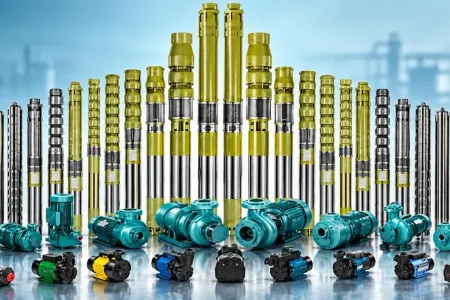
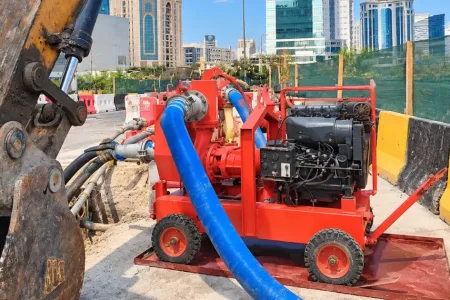
Pumps are used wherever water, wastewater or other liquids need to be moved, drained, transferred or controlled. But the same pump cannot suit every application. A construction site may need a dewatering pump, a wastewater system may require a sewage pump, while a deep sump or tank may be better suited to a submersible pump. Understanding the application first makes pump selection easier and helps avoid choosing equipment based only on pump size or horsepower. TARIS supports pumping requirements for construction, mining, wastewater, flood control, marine, quarry, industrial and related projects across the UAE, Oman and Bahrain.
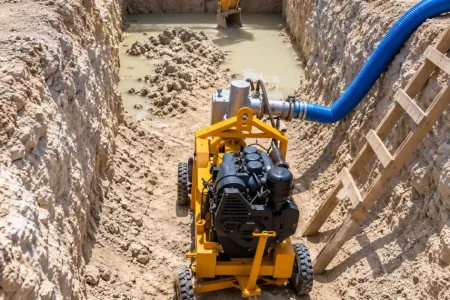
Dewatering pumps are commonly used where groundwater, rainwater or accumulated site water needs to be removed continuously. Self-priming, vacuum-assisted and diesel-driven configurations are particularly useful for construction, excavation, wellpoint systems and temporary water-transfer projects.
Submersible pumps operate directly inside the liquid being pumped. They are practical for sumps, pits, tanks, drainage areas and deeper water sources where placing the pump directly in the water simplifies the installation.
Sewage pumps are designed for wastewater that may contain suspended solids, fibres or contamination. Depending on the application, vortex, non-clog, grinder or cutter-type configurations may be considered.
Trash pumps are portable pumping solutions used where water contains sand, mud or small debris. They are commonly selected for temporary construction drainage, floodwater removal and quick-response pumping.
| Application | Common Pump Choice | Main Purpose |
|---|---|---|
| Construction | Dewatering / Submersible Pumps | Groundwater and excavation drainage |
| Mining | High-Flow Dewatering / Submersible Pumps | Pit and working-area drainage |
| Sewage | Sewage / Non-Clog Pumps | Wastewater and solids handling |
| Flood Control | High-Flow / Trash Pumps | Rapid water removal |
| Rainwater | Submersible / Dewatering Pumps | Stormwater and site drainage |
| Petrochemical | Industrial Process Pumps | Liquid transfer and utility services |
| Marine | Submersible / Transfer Pumps | Drainage and water transfer |
| Quarry | Dewatering / Slurry Pumps | Pit water and solids-bearing water |
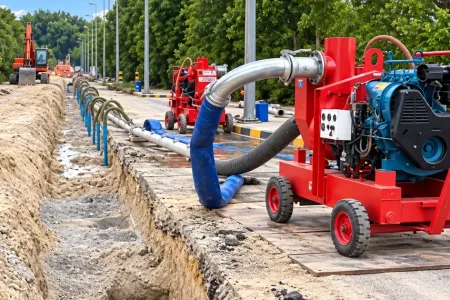
Construction Pump Applications Keeping Excavations Workable Construction sites regularly face groundwater, rainwater and water accumulation in excavations, foundations and trenches. Dewatering pumps are commonly used for continuous groundwater removal, while submersible pumps are practical for sumps and isolated low points. For projects involving groundwater lowering, a complete system may also include wellpoints, header pipes, hoses and vacuum-assisted pumping equipment.
Mining Pump Applications Removing Water from Pits and Working Areas Water accumulation can interrupt mining operations, reduce access and affect working conditions. Mining applications may require high-flow dewatering pumps, high-head pumps or heavy-duty submersible pumps, depending on the depth and discharge distance. Pump selection should consider not only water volume but also sand, suspended solids, elevation and long operating hours.
Sewage Pump Applications Moving Water That Contains Solids Sewage applications require pumps designed differently from normal clean-water pumps. Suitable submersible sewage, vortex or non-clog pumps can transfer wastewater from sewage tanks, lift stations, pits and treatment systems. Where fibres or difficult waste are present, cutter or grinder configurations may also be considered.
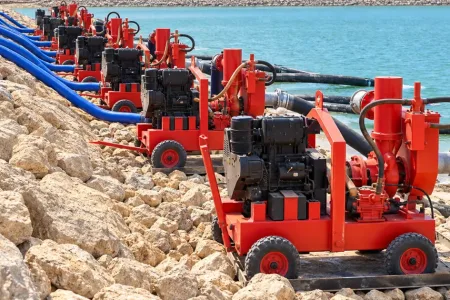
Moving Large Volumes of Water Quickly Flooding often requires rapid deployment and high pumping capacity. Depending on water condition, high-flow dewatering pumps, trash pumps and submersible pumps can be used to remove water from roads, buildings, construction areas and low-lying locations. For emergency applications, portability, quick priming and easy hose connection can be as important as maximum flow.
Rainwater can quickly accumulate in construction sites, basements, parking areas and drainage systems. Submersible drainage pumps are useful when water collects in sumps or pits, while surface-mounted dewatering pumps can handle larger temporary water-transfer requirements. The correct solution depends on rainfall volume, site drainage and the required discharge distance.
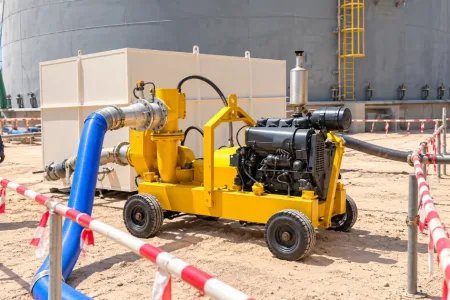
Pumping Where Process Conditions Matter Petrochemical and industrial operations can involve water transfer, utility systems, drainage and different process liquids. Pump selection in these environments depends heavily on fluid properties, temperature, pressure, materials of construction and site specifications. Unlike general construction pumping, industrial applications may require specialised centrifugal, chemical or process-pump configurations.
Drainage and Water Transfer Around Marine Operations Marine projects can require pumps for deck drainage, dock areas, temporary construction works, tanks and general water transfer. Suitable submersible, centrifugal and dewatering pumps may be used depending on the application. For coastal environments, material selection and corrosion resistance should also be considered when choosing pumps and accessories.
Road construction, pipelines, drainage networks and utility installations often involve temporary excavation below ground level. Dewatering pumps help remove groundwater from trenches and work areas, while submersible pumps can support smaller pits and localised drainage points. For long pipeline or infrastructure projects, portability and quick relocation can become important selection factors.
Dewatering pumps are commonly used for larger groundwater and excavation requirements, while submersible pumps are useful for sumps, pits and localised drainage.
A suitable sewage or wastewater pump should be selected according to solids size, fibres, flow and required head.
High-flow dewatering pumps, trash pumps and submersible pumps are commonly considered depending on water volume and contamination.
Sometimes, but mining applications may require higher head, heavier-duty construction or greater resistance to abrasive water. The actual duty should be checked.
A suitable trash, solids-handling, dewatering or slurry pump may be required depending on the concentration and size of solids.