Choosing between a submersible pump and a dewatering pump depends on where the water is located, how much water must be removed, the required head, solids in the water and the operating conditions.
One important point: a submersible pump can also be used for dewatering. In this comparison, “dewatering pump” refers mainly to surface-mounted self-priming or vacuum-assisted dewatering pumps commonly used on construction and groundwater-control projects.
What Is a Submersible Pump?
A submersible pump operates while fully or partially submerged in the water being pumped.
The motor and pump are combined in a sealed unit, allowing the pump to push water directly from the source.
Submersible pumps are commonly used for:
Construction pits
Basement drainage
Sumps
Floodwater removal
Sewage and wastewater
Deep wells
Tank drainage
Industrial applications
They are especially useful when the water level is too deep for practical suction from a surface-mounted pump.
What Is a Dewatering Pump?
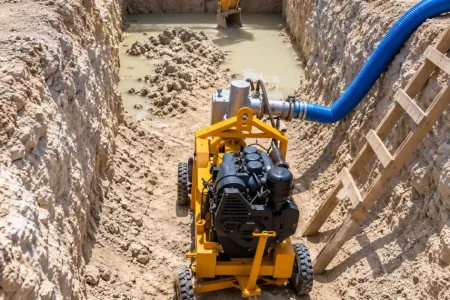
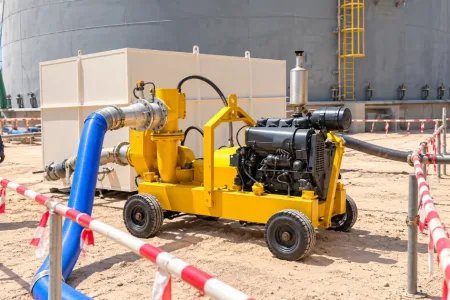
A surface-mounted dewatering pump is positioned above the water level and draws water through a suction line.
Common types include:
Self-priming centrifugal pumps
Vacuum-assisted pumps
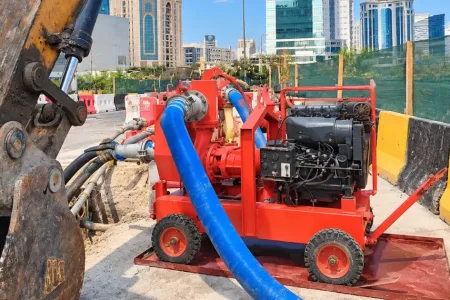
Diesel-driven dewatering pumps
Electric dewatering pumps
High-flow centrifugal pumps
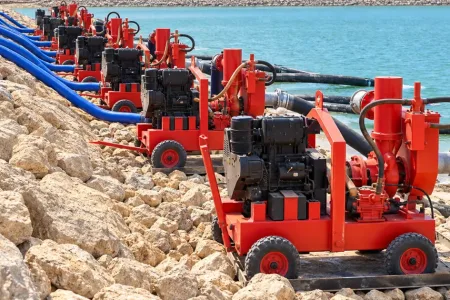
These pumps are widely used for construction dewatering, excavation drainage, groundwater control, wellpoint systems and temporary water transfer.
Submersible Pump vs Dewatering Pump: Quick Comparison
For deeper pits or applications where the water level is well below ground level, a submersible pump can be the better option because it operates directly inside the water.
Surface dewatering pumps depend on suction conditions. As suction lift increases, pump performance and priming can become more challenging.
For deeper groundwater lowering, the project may require a deep-well system rather than simply using a larger surface pump.
Which Pump Is Better for Construction Dewatering?
A submersible pump works well for collecting and removing water from sumps, pits and excavations.
A surface dewatering pump may be more suitable when the project requires:
Continuous pumping
Larger flow rates
Long discharge distances
Wellpoint dewatering
Mobile diesel operation
Multiple suction points
Easy service access
The correct choice depends on the actual site conditions.
TARIS supports different pumping requirements rather than recommending one pump type for every application.
Depending on the project, the solution can include submersible pumps, self-priming dewatering pumps, vacuum-assisted pumps, sewage pumps, diesel-driven pumps, hoses, couplings, header pipes, wellpoints and related accessories.
For projects in Oman, customers can share their duty conditions so the pump can be matched more closely to the actual application.
Different Pump Designs. Different Dewatering Strengths.
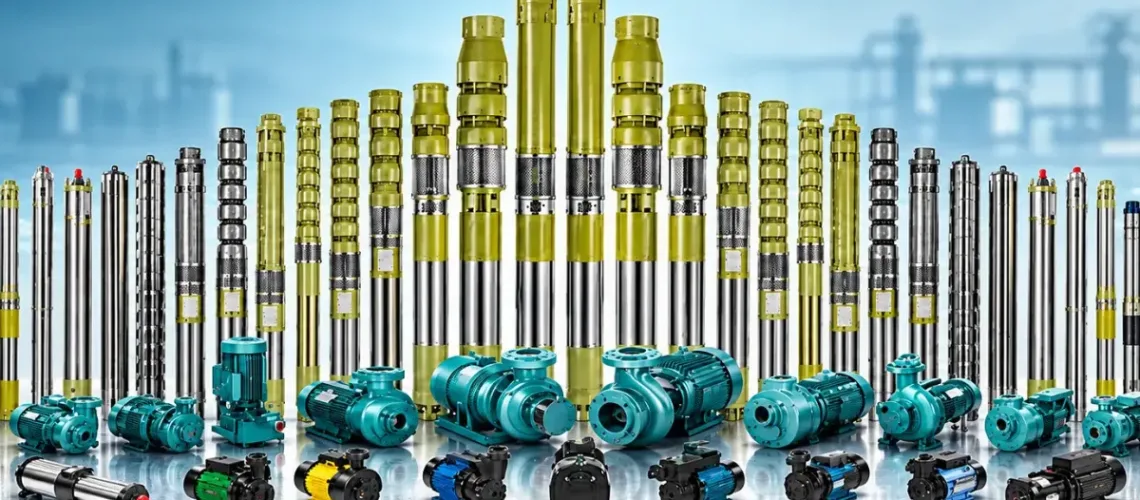
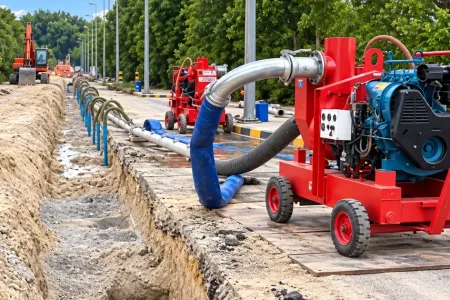
Submersible pumps are practical for sump drainage, while surface self-priming or vacuum-assisted pumps may be better for larger flows and continuous groundwater-control duties.


 by