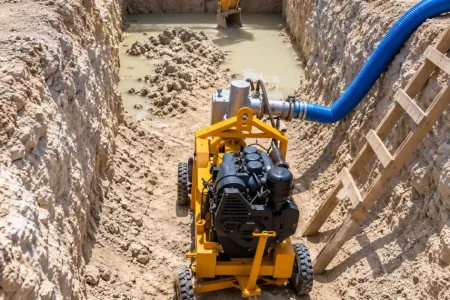
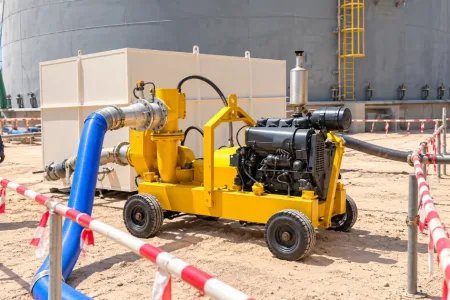
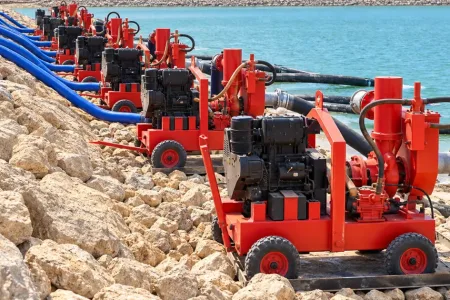
Buying a dewatering pump is not only about choosing a 4 inch, 6 inch or 8 inch model. The right pump depends on how much water needs to be removed, how far it needs to travel, water condition, suction depth, operating hours and available power.
For contractors and project teams, asking the right questions before purchase can prevent poor performance, unnecessary fuel use and incorrect pump sizing.
Pump size should not be selected only by suction and discharge diameter.
A 6 inch pump from one model may perform very differently from another 6 inch pump. The better approach is to check the required flow rate and total head first.
If the site requires large-volume pumping, a larger pump may be suitable. For smaller pits or temporary drainage, a compact pump may be enough.
Which Type of Pump Is Best for My Site? Buying a Dewatering Pump
The application determines the pump type.
For general construction dewatering and groundwater control, a self-priming or vacuum-assisted dewatering pump may be suitable.
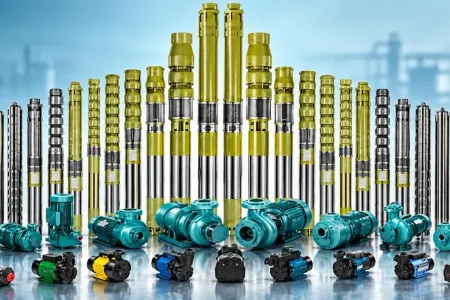
For pits, sumps or areas where the pump can operate directly in water, a submersible pump can be a better option.
For wastewater or water containing larger solids, a sewage or trash pump may be more appropriate.
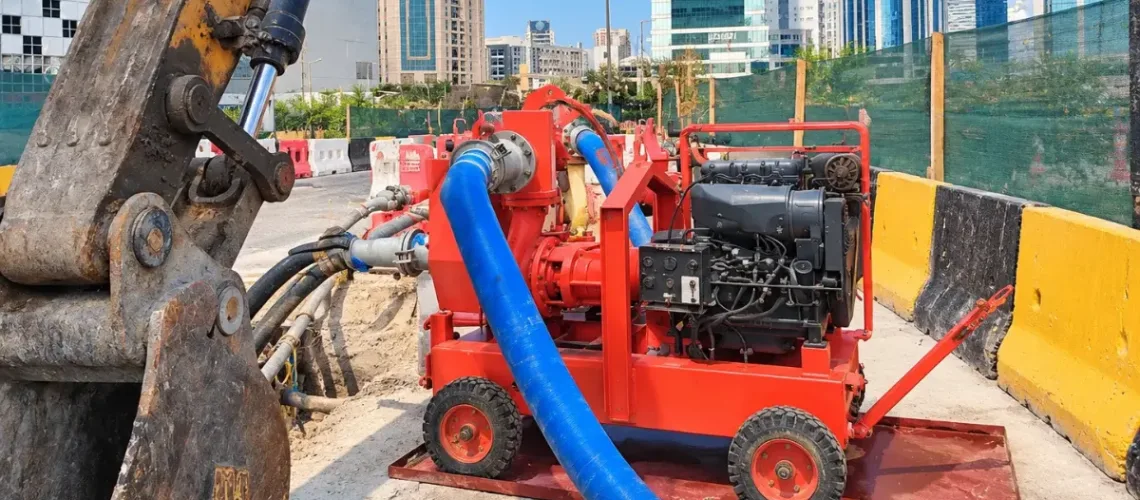
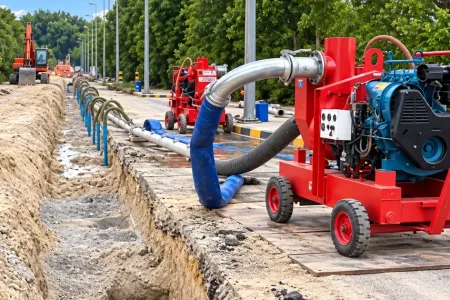
A diesel dewatering pump is practical for remote sites, mobile operations and projects where electrical power is not easily available.
An electric pump can be useful where stable power is available and the pump will operate in a fixed location.
The right choice depends on site access, operating hours, power availability and maintenance requirements.
Yes. A complete dewatering setup usually requires the correct suction hose, layflat or discharge hose, strainer, couplings, flanges and fittings.
The suction hose must be suitable for vacuum conditions, while the discharge hose should match the required pressure and flow.
Poor hose selection can reduce pump performance even when the pump itself is correctly sized.
Simple Buyer Rule
Application + Flow + Head + Water Condition + Power Source = Better Pump Selection
A good pump supplier should understand the site requirement first and recommend equipment based on the actual duty rather than only the pump size.
TARIS supports dewatering pumps, submersible pumps, sewage pumps, hoses, couplings, fittings and related pumping accessories for project requirements across the UAE, Oman and Bahrain.


 by