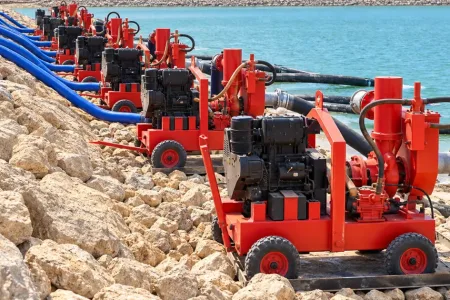
Dewatering Pump Mistakes to Avoid on Site — Plus Simple Troubleshooting Tips

A dewatering pump can perform well only when the full setup is correct. On construction sites, many pump problems are not caused by the pump itself, but by wrong sizing, poor suction arrangements, air leaks, blocked strainers, incorrect hose selection or weak maintenance. This guide explains the most common dewatering pump mistakes to avoid and what to check when performance drops during site operation.

One of the most common Dewatering Pump Mistakes is selecting a pump only by connection size, such as 4 inch, 6 inch or 8 inch. Pump size alone does not tell you how much water the unit can actually move. Two pumps with the same inlet and outlet size may have very different flow, head, engine power, impeller design and solids-handling capacity. The better approach is to match the pump to the required flow, total head, suction condition and water quality.

Ignoring Suction Lift

Surface dewatering pumps depend heavily on suction conditions. If the water level is too far below the pump, priming can become difficult and performance may drop. Long suction hoses, excessive bends or poor hose routing can make the problem worse. If the suction depth is too great, a different dewatering method such as wellpoint or deep-well pumping may be more suitable than simply using a larger surface pump.

Allowing Air Leaks on the Suction Side

Even a small air leak can reduce suction performance. Loose couplings, damaged gaskets, cracked suction hoses or poorly tightened fittings can allow air into the system and make the pump struggle to prime. If a pump repeatedly loses prime, the suction line should be checked from the strainer all the way to the pump connection.

Using the Wrong Hose

A suction hose must be strong enough to resist collapse under vacuum. Using a soft discharge hose on the suction side can restrict flow and reduce pump performance. Likewise, an undersized discharge hose can create unnecessary friction loss and reduce actual water flow. The hose diameter, length and construction should match the pump duty.

A strainer helps reduce the entry of larger debris into the pump. Without proper screening, stones, waste or other material may enter the suction line and cause blockage or damage. The strainer should also be kept clear during operation. A blocked strainer can make the pump appear weak even when the pump itself is working correctly.

Running the Pump Outside Its Duty Range

Every pump performs within a specific operating range.

Operating too far away from the recommended duty point can lead to poor efficiency, vibration, higher fuel consumption and increased wear.

This is why the pump performance curve is important.

The actual operating point should be checked against the required flow and total head.

Ignoring Solids in the Water

Construction water may contain sand, silt, mud or suspended solids.

Not every dewatering pump is designed for the same solids size.

If the water contains heavy sludge, sewage or larger debris, a trash pump, sewage pump or sludge pump may be more suitable.

Using the wrong pump type can increase blockage and wear.

A Better Site Practice

Before starting a dewatering pump, confirm three things:

The suction side is airtight.
The pump is correctly sized for the required duty.
The discharge route is suitable for the required flow.

These simple checks can prevent many common site problems.

Quick Troubleshooting Guide : Dewatering Pump Mistakes

Pump Is Not Priming

If the pump will not prime, first check for air leaks, low water level, blocked suction strainer, damaged suction hose or loose couplings.

Also confirm that the suction lift is within the pump’s practical operating range.

Pump Is Running but Flow Is Low

Low flow can be caused by a blocked strainer, restricted suction hose, excessive discharge head, worn impeller, incorrect engine speed or air entering the suction line.

Check the full system rather than immediately assuming the pump is faulty.

Pump Keeps Losing Prime

Repeated loss of prime usually points to an air leak, damaged suction hose, faulty non-return arrangement or poor suction conditions.

Inspect all joints and seals carefully.

Engine Runs but Pump Does Not Move Enough Water

If engine speed appears normal but water output is weak, check suction blockage, impeller wear, hose restrictions and discharge resistance.

The operating point may also be outside the pump’s effective range.

Pump Is Vibrating or Making Unusual Noise

Vibration may indicate poor mounting, cavitation, air entering the suction line, loose components or internal wear.

The pump should not continue operating under severe vibration without inspection.

When Should You Stop Troubleshooting and Call for Support?

If basic checks do not restore normal operation, or if the pump shows signs of seal failure, abnormal vibration, overheating or repeated priming problems, technical inspection may be required. Continuing to run a pump with a mechanical problem can increase damage and downtime. TARIS supports dewatering pump and related equipment requirements, including hoses, fittings, wellpoints, header pipes, valves and pump accessories.

Icon min 1

Good Dewatering Starts Before the Pump Is Switched On.

Taris Pumps

Frequently Asked Questions

Common causes include air leaks, blocked strainers, damaged suction hoses, excessive suction lift or loose connections.

Low flow may come from suction restrictions, excessive head, wrong hose sizing, worn pump parts or insufficient engine speed.

Yes. A blocked suction strainer can restrict water entering the pump and significantly reduce flow.

If the water contains heavier solids, sewage, sludge or debris beyond the dewatering pump’s solids-handling capacity, another pump type may be more suitable.

Need Equipment? Let's Connect

CAPTCHA image

This helps us prevent spam, thank you.

Ask an expert